business
IUIU and NWSC Set a New Standard for Technical Education Support

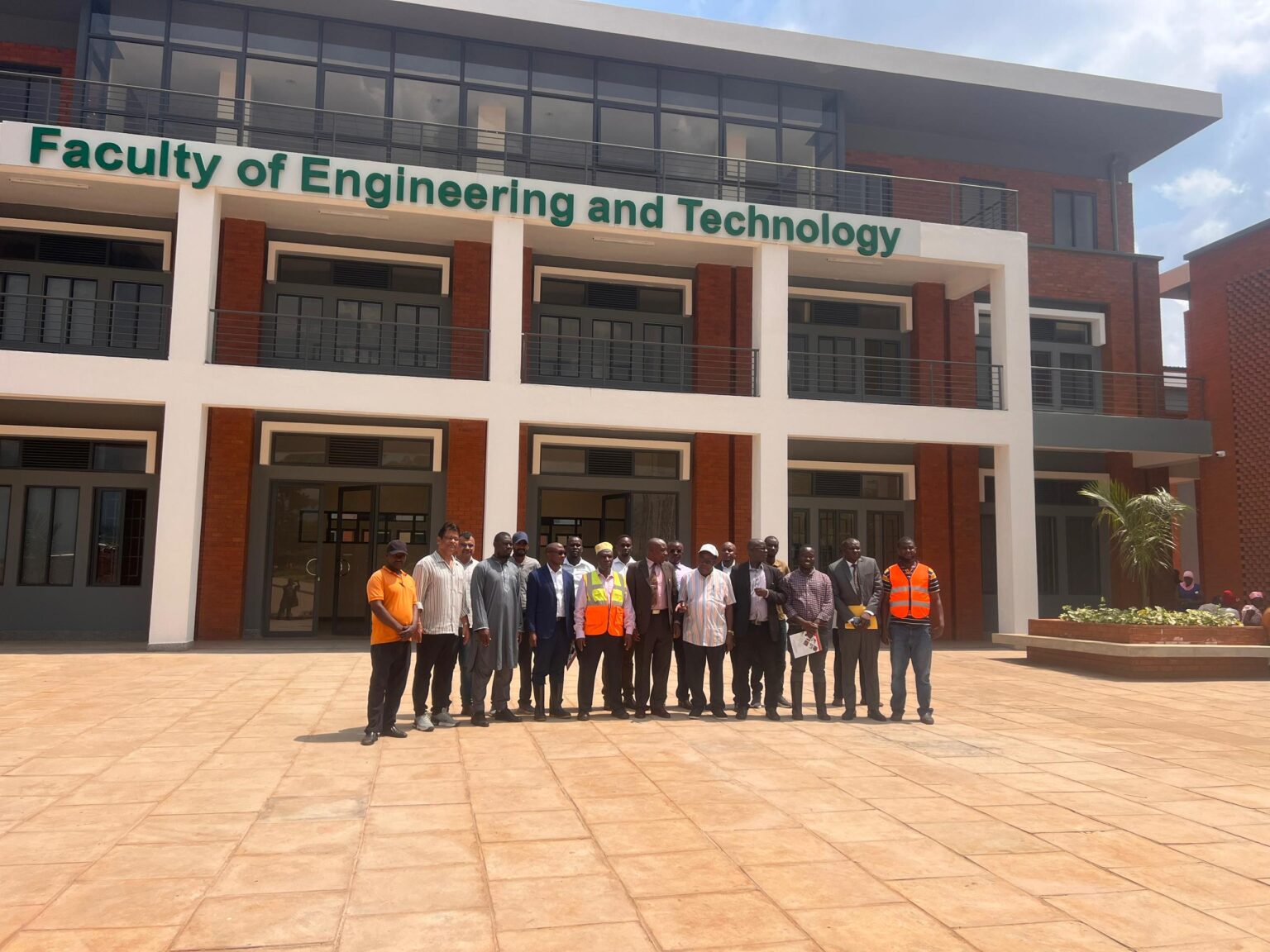
MBALE: The Islamic University of Uganda (IUIU) Mbale Campus has taken a major step forward in reshaping technical education in Eastern Uganda with the official handover of its newly constructed Faculty of Engineering and Technology. The facility, now fully equipped with modern water and sewerage services, was commissioned on Monday in a ceremony led by Dr Eng Badru Kiggundu, Chairperson of the National Water and Sewerage Corporation (NWSC) Board and a long-standing figure in Uganda’s infrastructure and governance sectors.
The event was warmly attended by university administrators, engineers, and public utility leaders for a joint tour of the new faculty, followed by a site visit to the IUIU Wastewater Stabilisation Ponds, a complementary sanitation project under construction. The two milestones, completed building and near-complete ponds, are a deliberate pairing of academic investment with essential service infrastructure, aimed at ensuring the faculty’s sustainability from day one.
A standout moment came as NWSC was recognised for its prompt and quality-assured delivery of key utility connections to the facility, characterised by a tightly coordinated intervention that witnessed NWSC Mbale extend a 200-metre HDPE water supply line, which has since passed pressure and quality testing. The outcome is consistent water pressure, safe drinking water, and reliable flow capacity across the faculty for teaching labs, hostels, washrooms, and staff offices alike.

“This was a fast, responsive, and technically sound solution,” said one university official during the tour. “NWSC helped ensure that the faculty would open its doors with dignity.”
At the same time, NWSC engineers are finalising the sewerage connection, linking the faculty to IUIU’s new wastewater ponds through a 200 mm HDPE sewer main. The ponds, featuring anaerobic, facultative, and maturation stages, have been engineered to treat the full volume of campus-generated wastewater, in line with national effluent standards and ecological protection of nearby Namatala wetlands.
Speaking during the field tour, Eng. Mukago Gilbert, General Manager of NWSC Mbale Area, noted that the pond system is designed for future scalability. “We’re not just serving today’s student body. The system can be expanded to cover surrounding communities like Nkoma, Namatala, and Mission Cell when the bigger sewer trunk network is ready,” he said.
More than infrastructure, the ponds will double as a live learning lab for engineering students, a rare practical resource for hands-on training in wastewater management, and a distinct advantage for IUIU’s technical education programme.
After the site visit, a representational tree planting session was held as Dr. Kigunddu led in prayer and planted the first tree, with Eng. Mukago watering it, which was a meaningful gesture toward environmental stewardship.
The formal handover followed shortly after, with VCon Construction Ltd, the project’s contractor, officially transferring the facility’s keys, system manuals, and technical documents to the university. In his remarks, the Vice Rector of IUIU extended gratitude to all partners, including NWSC, the Islamic Development Bank, and Symbion Consulting Group, for their unified effort in delivering what he called “a game-changing addition to the university’s future.”
Dr Badru Kiggundu, in his keynote, pointed to the broader lesson in partnership.
“What we see here today is proof that when government agencies, academic institutions, and development partners align around a clear goal, progress follows, and that progress can be both timely and impactful,” he said.
He also used the occasion to acknowledge the continued support of the President of Uganda in accelerating institutional development across the country.
The addition of water and sanitation facilities to this academic development is in line with the goals of the Integrated Water Management and Development Project (IWMDP), where NWSC is upgrading similar sanitation systems in Doko, Namatala, and other areas of Mbale.
With foundational infrastructure now in place and a support system that reaches into real-world practice, the university is better positioned to deliver a generation of problem-solvers ready to address Uganda’s most pressing challenges affiliated with water, the environment and sanitation.