

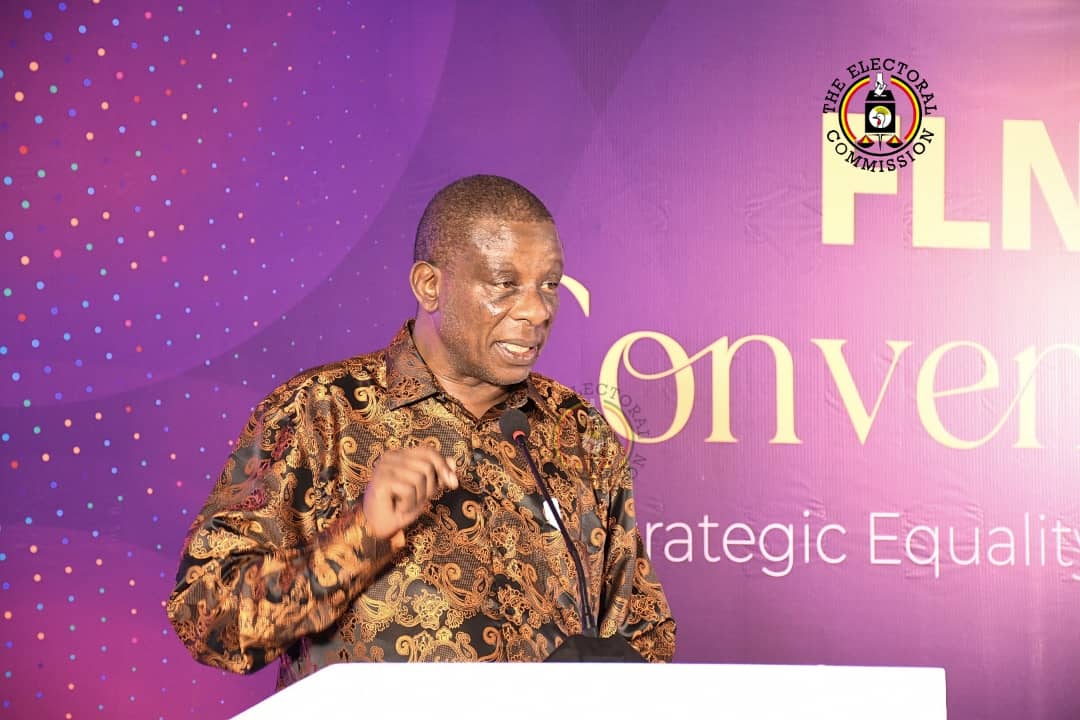
KAMPALA, UGANDA; The Electoral Commission (EC) is seeking a supplementary budget of shs 469.5 billion to facilitate preparations for the January 2026 general elections, including the acquisition of upgraded biometric systems and the creation of additional polling stations.
The request was presented to Parliament’s Budget Committee by Richard Kamugisha, the Acting Secretary to the Commission, who defended the supplementary schedule and explained the increased financial needs.
According to Kamugisha, shs 268.380 billion of the request is intended for the acquisition of the Biometric Voter Verification Kits (BVVK) with enhanced features recommended for use on polling day.
An additional shs 19.603 billion is required for a new de-duplication system, which will help the Commission identify and eliminate multiple entries of the same individual from the voters’ register.
Kamugisha said the additional funding request was influenced by a Cabinet decision requiring the mandatory use of biometric voter verification during the 2025/2026 elections, as well as the need to expand polling infrastructure.
“Subsequent consultations with stakeholders raised concerns regarding the effectiveness of voter verification using the Uganda Bureau of Statistics tablets, which the Commission had planned to use on polling day,” Kamugisha explained.
“Additionally, Cabinet resolved that for the 2025–26 elections, the Electoral Commission should deploy mandatory biometric voter verification machines.”
He added that fulfilling these new requirements significantly increased the Commission’s budget for the current financial year.
“As a consequence, and to effectively verify every voter at the polling station, the Commission undertook a number of processes which increased the budgetary requirements for the current financial year,” he said.
The Commission also informed Parliament that it had created an additional 15,256 polling stations, pushing the national total from 38,000 to 50,739 polling stations ahead of the 2026 polls.
Kamugisha explained that this expansion was designed to reduce congestion and ensure that biometric verification which takes about 30 seconds per voter does not disrupt the voting schedule.
“In order to ensure that voters are able to poll between seven and four o’clock using mandatory biometric verification, the Commission has split polling stations so that each does not exceed 600 voters, except in highly urbanised areas,” he said.
“The cost of splitting polling stations has created an additional 15,256 polling stations from what had initially been planned.”
The Commission further told MPs that it needs shs 2.4 billion to gazette the newly created polling stations and shs1.2 billion to publish them in national newspapers, as required by law.
“The total number of polling stations currently stands at 50,739,” Kamugisha said.
“The additional polling stations, therefore, must be published in the Gazette and in the local dailies, and we require shs 1.2 billion to publish these polling stations in the dailies.”
The Budget Committee is expected to scrutinize the request before making recommendations to Parliament.
Related Posts:




Recommended for you




Leave a Reply
Leave a Reply