

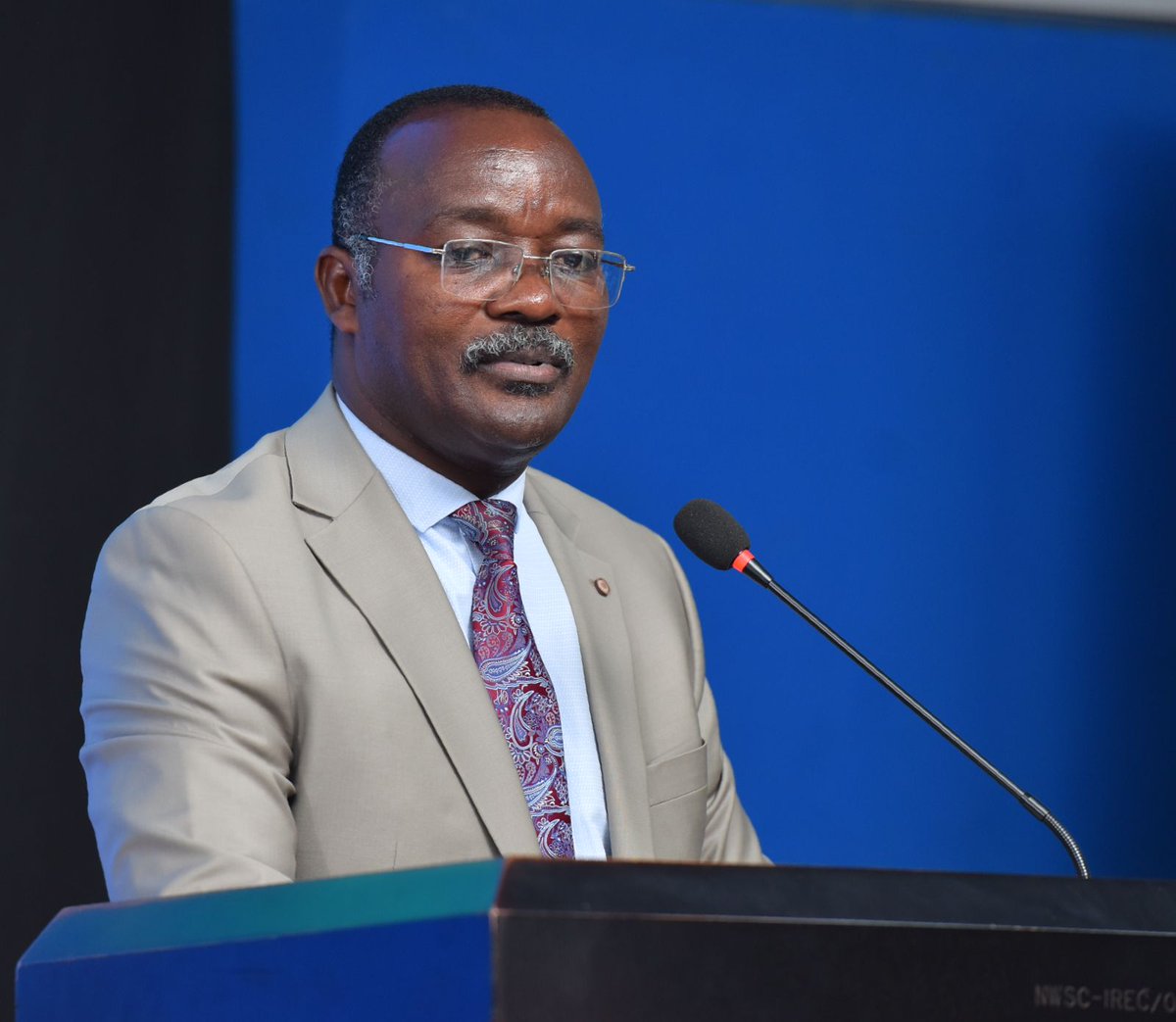
KAMPALA, UGANDA; According to the Managing Director of the National Water and Sewerage Corporation, Eng. Dr. Silver Mugisha, the utility has begun constructing new reservoirs and installing larger transmission pipelines to strengthen the network and ensure water reaches high-demand areas more efficiently.
However, he said the government has recently made efforts to address the issue. In the current budget, about shs81 billion was allocated to reduce these arrears, and discussions with the Ministry of Finance are ongoing to clear the remaining domestic arrears.
National Water currently serves 284 towns across Uganda. From these towns we have about 1 million connections. When I talk about connections, it includes households, institutions, schools, hospitals and businesses. When you estimate the number of people served through those 1 million connections, the figure comes to about 20 million Ugandans. These people are spread across the country. I am happy that National Water is now truly a national institution, unlike before when services were concentrated in a few urban centers.
Hoima is one of the towns we serve, but it has perennial water challenges, especially during the dry season. This is mainly because most of the water comes from underground sources. We tried to source water from River Kafu, but the yield was not sufficient. As a result, much of Hoima City relies on underground water systems.
However, the good news is that we have a major expansion project under design to supply water to Hoima City and surrounding areas. We have completed feasibility studies and now know the investment required. We recently held a baraza with stakeholders to explain why water supply reduces during the dry season. Over the next five years, a major regional project will address these shortages.
The issue is that the pipes currently installed do not have enough capacity to distribute the water effectively. To solve this, we are constructing new reservoirs and installing larger transmission pipes. For example, we have secured land for a new reservoir in Kanyanya, which will help improve supply. Customers may have already seen large pipelines being installed in the area. We are asking for cooperation from residents so that these projects can progress smoothly.
Utilities measure this using a parameter called debt age. For non-government customers, the average debt age is about 2.1 to 2.5 months, which is within acceptable industry limits. In fact, the collection rate is over 95 percent. The main challenge comes from government institutions, where payment delays can exceed ten months.
However, government has recently made efforts. In the current budget, about 81 billion shillings was allocated to reduce these arrears, and discussions with the Ministry of Finance are ongoing to clear the remaining domestic arrears.
My message to customers is that our vision is water for all. Our goal is to ensure that every Ugandan has access not only to water but to safe and reliable water. We are working hard to expand infrastructure, improve service delivery and strengthen customer engagement.
As we move toward 2030, customers should expect better reliability, improved communication and wider coverage as we continue implementing our expansion projects across the country.
Related Posts:



Recommended for you






Leave a Reply
Leave a Reply