

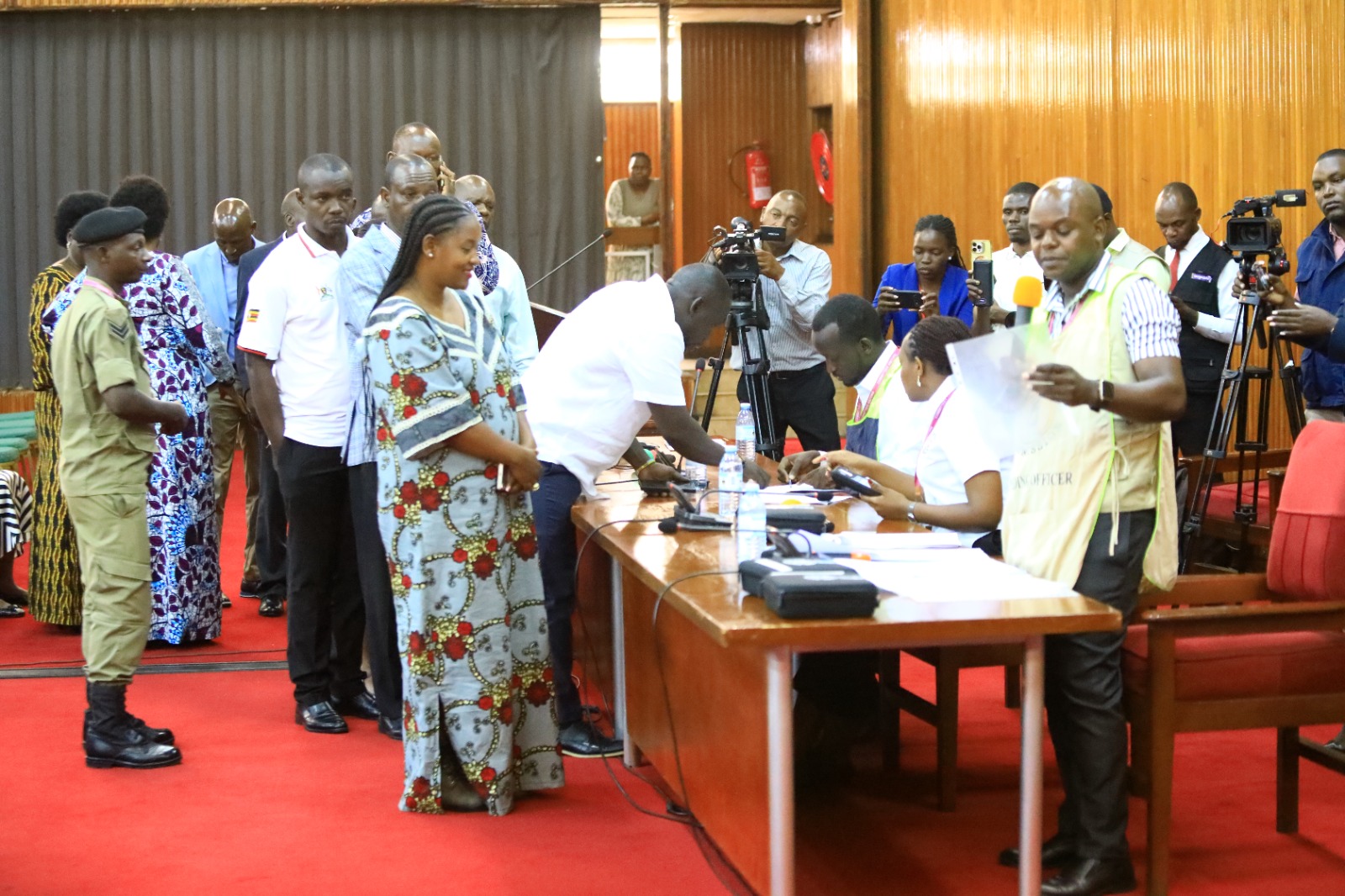
KAMPALA, UGANDA; The Electoral Commission has assured legislators of the accurate and transparent use of Biometric Voter Verification Kits in the 2026 general elections. The commission, charged with managing elections, conducted a one-day training workshop at Parliament on Thursday to guide lawmakers on the operation of the new kits.
The training addressed recent concerns from opposition leader Joel Ssenyonyi and other MPs about a lack of regulations for the biometric system just weeks before elections.
Solomon Muhumuza, the EC’s director of technical services, said the kits are upgraded from those used in 2016 and 2021 and feature capabilities to prevent ballot manipulation.
“Before the voting exercise on polling day, the kits will be witnessed by appointed polling agents to ensure they have not been tampered with,” Muhumuza said. “The kits are preloaded with voter data to aid identification and verification.”
His remarks responded to concerns from MPs about the potential for prescanning ballot papers. Emmanuel Otaala, an NRM MP for West Budama County South, questioned how the EC would prevent ballot stuffing if such prescanning were possible.
Margaret Ayebare, the woman MP for Mbarara District, asked how officials would verify that a kit begins with the first registered voter at a station.
Sarah Opendi, an NRM MP for Tororo District, raised concerns about public sensitization. “Will the Electoral Commission have time to take our polling agents through this process?” she asked. “Shall the public be educated on how these kits work ahead of the elections?”
Gorreth Namugga, an NUP MP for Mawogola County South, questioned the backup plan if kits fail at a polling station.
EC officials explained that each voter will be identified and verified using the kit before receiving three ballot papers for presidential, parliamentary and local representative votes.
Catherine Onekalit, a principal election officer, clarified that preloaded voter data is for identification, not prescanning. Voters must present a location slip or national ID, followed by biometric verification via fingerprint or facial recognition.
She said the kits ensure only registered persons vote and prevent multiple voting.
Samuel Kiyingi, another principal election officer, said alternative measures are in place for faulty kits and that voter sensitization will occur ahead of the polls through sub-county level trainings.
The Electoral Commission has procured 109,142 biometric kits for deployment across the country’s 50,739 polling stations.
Related Posts:


Recommended for you


Leave a Reply
Leave a Reply